L’essentiel à retenir :
Savoir comment laver une voiture dans un car wash repose sur une préparation soignée et le respect d’une plage de température idéale de 5°C à 30°C. Le choix de la méthode et des produits, spécialement un shampooing pH neutre, conditionne la protection durable de la peinture. Organiser les étapes et utiliser une technique adaptée évite les micro-rayures et optimise la brillance finale.
Est-il vraiment simple d’entretenir son véhicule dans un car wash sans compromettre sa carrosserie ? La fréquence des lavages peut varier selon le climat, les dépôts et même le type de carrosserie, ce qui rend la compréhension des avantages des différents types de lavage indispensable. L’usage de matériel spécifique comme la lance à mousse ou les techniques de rinçage influe sur la qualité globale. Maîtriser ces paramètres vous permet de prolonger l’éclat et la durabilité de votre peinture grâce à un travail à la fois rapide et sécurisé.
How to wash a car in a car wash: essential prep
Before starting the process on how to wash a car in a car wash, preparing your vehicle properly is key to avoid damage and optimize cleaning. First, pick the best time of day: early morning or late afternoon are ideal to prevent soap from drying too fast and leaving spots.
Check that the air temperature is between 5°C and 30°C since washing products work best in this range. If it’s too hot, soap can evaporate quickly; if too cold, washing agents lose efficiency.
Remove any debris such as stones, leaves, or grit stuck on the car’s surface and wheel wells. This step prevents accidental scratches during washing. Also, close all windows and sunroofs tightly to stop water from entering the interior, preserving the car’s upholstery and electronics. Il est également conseillé de prendre des mesures pour prévenir la corrosion du berceau afin de protéger la structure du véhicule.
Planning your wash by organizing your equipment and understanding the car wash system will help you follow the right steps smoothly, ensuring the gloss and protection of your paintwork remain intact.
Car wash types: advantages and drawbacks
| Car Wash Type | Advantages | Drawbacks |
|---|---|---|
| Automatic car wash | Fast, convenient, low effort | May cause swirl marks or scratches due to brushes; less thorough |
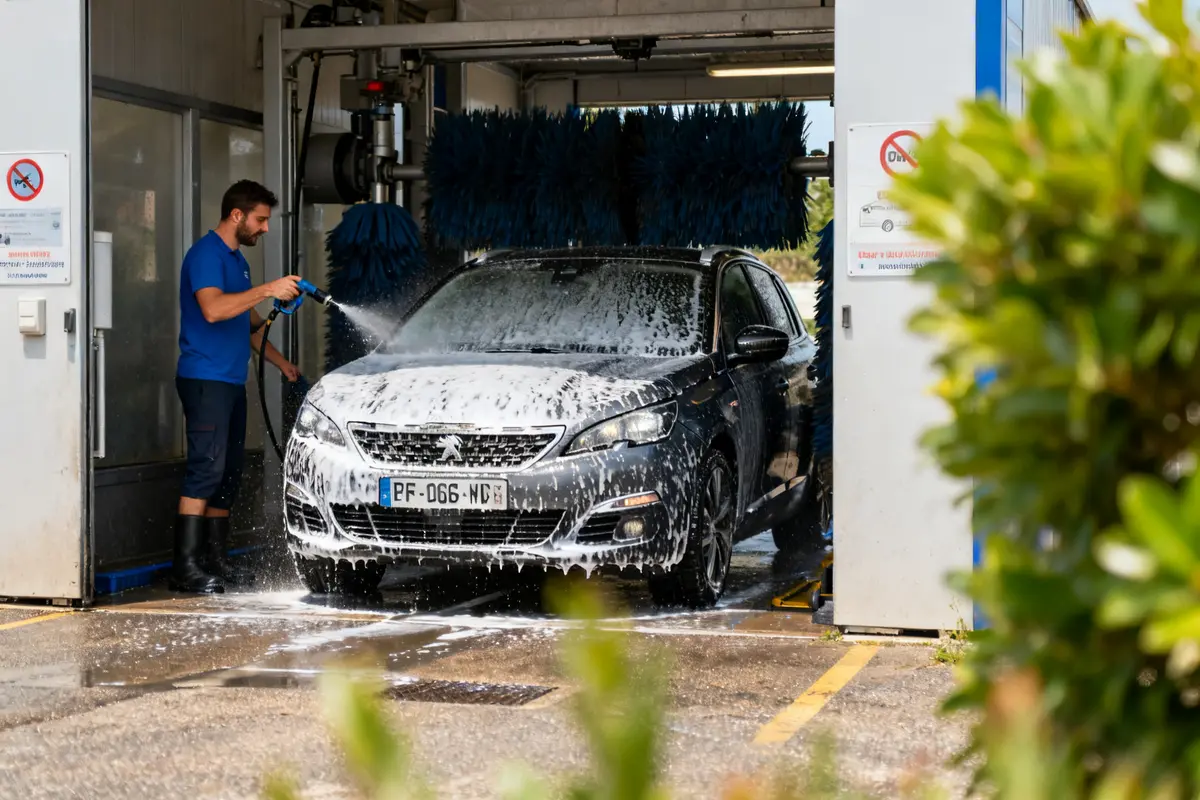
| Self-service car wash | Control over process; uses high-pressure water and quality soaps | Requires physical effort and technique knowledge |
| Hand wash by professionals | Thorough; can reach difficult corners; careful with finish | More expensive; depends on worker skill |
Understanding these types will help you decide which suits your preferences and vehicle best. Self-service washes provide a balance of efficiency and protection when you learn the right routine.
How to wash a car in a car wash: step-by-step guide
Step 1: Pre-rinse and prep
Start by rinsing the car thoroughly with water, focusing on removing loose dirt and grit. Use the high-pressure jet setting at the self-service station, working from the top downward. This pre-rinse eliminates abrasive particles that could cause micro-scratches during washing.
For stubborn dirt or oily contaminants, apply a degreasing agent such as a “Dammer” pre-wash chemical. Let it sit for about 2 to 3 minutes but no longer to avoid any risk of corrosion to the varnish. Immediately rinse off to prevent damage.
Step 2: Wheels and tires
Wheels gather brake dust and tar that requires special attention. Use a dedicated brush with stiff bristles to clean the rims and tires with a compatible wheel cleaner. Separate washing tools for wheels avoid cross-contamination with the car’s paint, reducing scratches on the bodywork.
Rinse wheels and tires thoroughly after cleaning before moving to the main body wash steps.
Step 3: Soap and washing technique
Apply soap foam uniformly with the foaming lance or brush system. Use the two-bucket method if washing manually: one bucket for soapy water and one for rinsing the wash mitt.
Always wash from top to bottom to prevent dirty water dripping down onto freshly cleaned areas. Rinse your sponge or mitt often to keep it free of grit, and replace the water in the buckets regularly to limit swirl marks on the paint.
Use pH-neutral shampoo designed for automotive paint to protect wax and clear coats. The ideal water temperature at self-service stations is around 20-25°C, enhancing the efficiency of detergents.
Step 4: Rinse and dry
Rinse the car thoroughly using high-pressure water from the roof to the wheels. Avoid leaving soap residues by inspecting foam marks carefully. Rinsing is crucial to avoid streaks and soap buildup that can dull the paint.
Dry the vehicle using soft microfiber towels or a chamois cloth. Work in straight motions along body lines. Drying quickly also prevents water spots, especially when using hard tap water.
Step 5: Final checks after wash
After drying, perform a walk-around close inspection under bright light. Look for any missed dirt spots, streaks, or water droplets. Use a quick detailer spray and a microfiber cloth to fix any spots and enhance shine.
Don’t forget to check rubber seals and door frames for residual water, wiping them dry to protect from mildew and corrosion.
Le mot de l’auteur
“Taking time during preparation and rinsing phases dramatically reduces swirl marks and extends your car’s paint durability.”
Post-wash care and drying: avoid spots
Drying your car thoroughly after washing is vital to achieving a spotless finish. Use clean, plush microfiber towels, and avoid air drying as it leaves mineral deposits causing unsightly spots.
For best results, employ a drying aid spray that adds gloss while allowing smoother towel glide. Use compressed air tools when possible to blow water from crevices and hard-to-reach places like emblems or door jambs.
The two-towel drying method is highly effective: one towel to absorb excess moisture, the other to buff and polish the surface. This prevents streaks and enhances shine.
Special cases: finishes, coatings and wraps
Matte/satin finishes: wash tips
Matte and satin finishes require gentle care because traditional waxing or polishing can spoil their unique appearance. Use matte-specific shampoos that clean without adding gloss. Avoid brushes; instead, wash using soft mitts and even strokes to preserve the surface texture.
Never use abrasive materials or harsh chemicals that can cause irreversible damage to these specialized finishes.
Ceramic coatings: care cautions
Ceramic coatings provide durable protection but can be sensitive to aggressive cleaning. Always use pH-neutral soaps and soft microfiber tools. Avoid harsh pressure washing methods that can degrade the coating prematurely. Pour maintenir un bon entretien, il est également possible d’opter pour le nettoyage FAP sans démontage, qui respecte la technologie de la coating.
Routine washing should be done gently, and detailing sprays specifically formulated for ceramic protection help maintain hydrophobic properties longer.
Vinyl wraps: gentle washing
Vehicles with vinyl wraps require a cautious washing approach. Avoid high-pressure jets on seams to prevent peeling or lifting. Use mild car shampoo and low-pressure rinsing.
Finger-tip cleaning or soft sponges help maintain the wrap’s color and avoid marks. Using the correct products ensures the wrap lasts and looks fresh.
Pro tips and common mistakes
- Change water frequently in buckets during two-bucket washing to prevent dirt build-up and reduce micro-scratches, a detail often overlooked.
- Do not let pre-wash degreasers sit too long on paint surfaces; an ideal wait time is 2 to 3 minutes before rinsing to avert corrosion risks.
- Always wash sections thoroughly and rinse immediately to avoid soap drying and streaks.
- Avoid washing your car under direct sunlight to prevent rapid drying and water spots.
- Be gentle around seals and trims to prevent damage or water ingress.
- Keep drying towels clean and dedicated to car care to avoid contaminating the paint.
- Inspect tools like brushes or mitts before use for grit or debris to prevent scratches.
- Use specialized products based on your car’s finish to maintain its value and beauty.
- Wash your microfiber towels regularly without fabric softeners to keep their softness and absorbency intact.
- Remember the temperature range of 5°C to 30°C for washing enables optimal detergent action.
🧴 Calculateur de produits pour how to wash a car in a car wash
Estimez la quantité optimale de savon et d’eau nécessaire selon la taille de votre véhicule.
FAQ — how to wash a car in a car wash
Do you turn the car off during a car wash?
Do you turn the car off during a car wash? Yes, it is important to turn off your vehicle during a car wash to ensure safety. Keeping the engine off avoids accidental movements and protects the car’s electronics from water exposure.
Do I put my car in neutral in the car wash?
Do I put my car in neutral in the car wash? For automatic car washes where your car is pulled along, you should put your car in neutral and keep your foot off the brake to allow the system to move it smoothly through the wash.
Is it better to hand wash a car or go through a car wash?
Is it better to hand wash a car or go through a car wash? Hand washing by professionals provides a more thorough and gentle clean for your car, especially on delicate finishes, but it costs more. Automatic washes are fast and convenient but can cause minor scratches.
How to wash a car in an automatic car wash?
How to wash a car in an automatic car wash? Prepare your vehicle by closing windows and removing loose debris. Enter the wash slowly, follow system instructions, and avoid braking during the cycle. Afterward, dry with microfiber towels to prevent spots.
What is the best washing technique to avoid swirl marks?
What is the best washing technique to avoid swirl marks? Use the two-bucket method with clean water, wash from top to bottom, frequently rinse your wash mitt, and use pH-neutral shampoo. Avoiding direct sunlight and abrasive brushes also minimizes swirl marks.
How to protect vinyl wraps during a car wash?
How to protect vinyl wraps during a car wash? Use gentle washing with mild shampoo and avoid high-pressure jets on seams. Clean with soft sponges or fingertip motion to prevent peeling, ensuring the wrap's longevity and vibrant appearance.

Max, passionné d’automobile, a transformé sa curiosité pour la mécanique en expertise reconnue après 15 ans dans le secteur auto/moto. Ancien conseiller technique, il décortique aujourd’hui les nouveautés du marché avec un œil critique et bienveillant.